
BaZi Academy
Direct Officer vs Seven Killings in BaZi
Direct Officer and Seven Killings are the two Authority roles created by the element that controls the Day Master. Polarity separates them; context determines how pressure and responsibility are read.
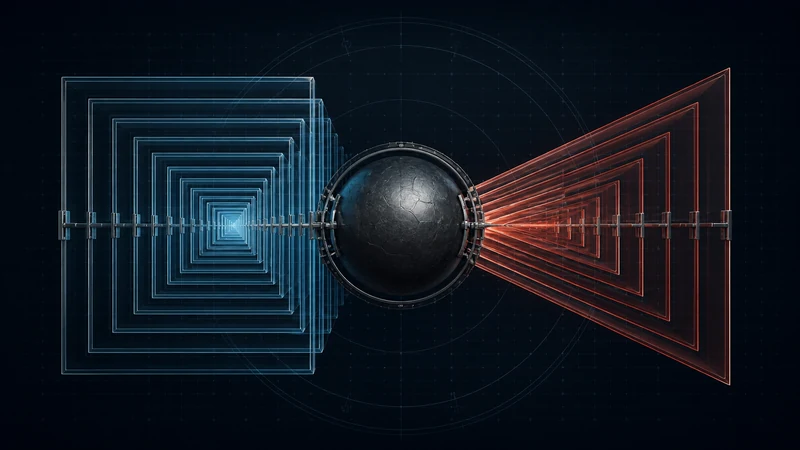
Direct Officer and Seven Killings are the two Authority roles in BaZi. Both come from the Five Element that controls the Day Master. Polarity makes the distinction: opposite polarity produces Direct Officer, while the same polarity produces Seven Killings, also called Indirect Officer.
These names describe calculated relationships between stems. They can organize questions about rules, pressure, responsibility, limits, and response to external demands. Direct Officer is not automatically favorable or civilized, and Seven Killings is not automatically violent or dangerous.
How the two Authority roles are derived
The Ten Gods derivation guide explains all five role families. For the Authority family, the controlling cycle is the starting point:
- Metal controls Wood.
- Water controls Fire.
- Wood controls Earth.
- Fire controls Metal.
- Earth controls Water.
Once the controlling element is known, polarity separates its two stems.
| Relationship to the Day Master | Polarity | Ten Gods role |
|---|---|---|
| A stem whose element controls the Day Master | Opposite polarity | Direct Officer |
| A stem whose element controls the Day Master | Same polarity | Seven Killings, or Indirect Officer |
For example, a Jia Wood Day Master is yang. Metal controls Wood. Xin is yin Metal, so Xin is Direct Officer relative to Jia. Geng is yang Metal, so Geng is Seven Killings relative to Jia.
Direct Officer and Seven Killings for all 10 Day Masters
The following table is derived from the stem relationships used by InnerCipher's current calendar library. The columns name Heavenly Stems, not occupations or people.
| Day Master | Element and polarity | Direct Officer | Seven Killings |
|---|---|---|---|
| Jia 甲 | Yang Wood | Xin 辛 | Geng 庚 |
| Yi 乙 | Yin Wood | Geng 庚 | Xin 辛 |
| Bing 丙 | Yang Fire | Gui 癸 | Ren 壬 |
| Ding 丁 | Yin Fire | Ren 壬 | Gui 癸 |
| Wu 戊 | Yang Earth | Yi 乙 | Jia 甲 |
| Ji 己 | Yin Earth | Jia 甲 | Yi 乙 |
| Geng 庚 | Yang Metal | Ding 丁 | Bing 丙 |
| Xin 辛 | Yin Metal | Bing 丙 | Ding 丁 |
| Ren 壬 | Yang Water | Ji 己 | Wu 戊 |
| Gui 癸 | Yin Water | Wu 戊 | Ji 己 |
The mapping does not change with gender. Some traditional schools assign spouse meanings to Officer roles under gender-specific conventions, but that is a separate, school-dependent interpretation. It is not required to derive either Ten Gods role and is not a universal conclusion about a partner.
What the comparison can help you ask
Both roles place the Day Master in relation to something that controls or constrains it. Their polarity differs, and so can their placement and participation in the chart.
| Point of comparison | Direct Officer | Seven Killings |
|---|---|---|
| Common source | The element that controls the Day Master | The element that controls the Day Master |
| Polarity relation | Opposite to the Day Master | The same as the Day Master |
| Useful reading questions | How are standards, roles, limits, or defined responsibilities organized? | How does concentrated pressure, enforcement, urgency, or challenge enter the structure? |
| Common stereotype to avoid | Always orderly, respectable, safe, or successful | Always aggressive, criminal, chaotic, or harmful |
| What still decides the reading | Season, strength, visibility, roots, repetition, position, Chart Structure, and the other Ten Gods | |
The wording in the third row is a set of questions, not a pair of personality profiles. A hidden Direct Officer in one branch is not the same fact as Direct Officer exposed on the Month Stem and rooted in several branches. Seven Killings can likewise be isolated, repeated, supported, drained, or central to the structure.
The chart context changes the reading
Day Master strength
Control acts differently depending on what it meets. A well-supported Day Master and a heavily drained Day Master do not carry the same relationship to repeated Authority roles. The strong and weak Day Master guide explains the seasonal, visible, root, and pressure factors behind that assessment. Strong does not mean immune to pressure, and weak does not mean incapable of responsibility.
Season and roots
The Month Branch supplies the seasonal setting. An Authority stem may be timely, out of season, rooted in one or more branches, or present only as a minor Hidden Stem. These are different structural facts even when the Ten Gods name is the same.
Visible and hidden positions
A role on a visible Heavenly Stem is easier to locate in the chart's upper layer. A role inside a branch still contributes to element counts, roots, and structure, but should not be described as though it occupies the same position. Year, Month, Day, and Hour positions also have distinct scopes without becoming one-line life predictions.
Repetition and coexistence
Direct Officer and Seven Killings can appear in the same chart. This is sometimes called mixed Officer and Killings in traditional discussion, but coexistence alone does not prove confusion, conflict, danger, or a career outcome. The reader still needs to see where each role appears and which one is supported.
Chart Structure and surrounding roles
BaZi Chart Structure checks the Month Branch, Hidden Stems, exposed stems, and limited special conditions under a defined method. An Officer or Seven Killings structure is more specific than merely finding one matching stem somewhere in the chart.
Resource roles generate the Day Master and may change how support is organized around pressure. Output roles are generated by the Day Master and can show another route through which demands are expressed or answered. These are relational mechanics, not formulas that guarantee protection, rank, rebellion, or harm.
Worked example: both roles are present, but hidden
This reproducible calculation uses April 7, 1992 at 16:00 in Tianjin, China, with the Asia/Shanghai time zone. The true solar adjustment gives about 15:46. The Four Pillars are:
Ren Shen / Jia Chen / Gui Chou / Geng Shen
Gui is yin Water. Earth controls Water, so yang Earth Wu becomes Direct Officer and yin Earth Ji becomes Seven Killings.
| Chart location | Hidden Stem | Authority role relative to Gui |
|---|---|---|
| Year Branch, Shen | Wu 戊 | Direct Officer |
| Month Branch, Chen | Wu 戊 | Direct Officer |
| Day Branch, Chou | Ji 己 | Seven Killings |
| Hour Branch, Shen | Wu 戊 | Direct Officer |
The calculated summary contains three Direct Officer occurrences and one Seven Killings occurrence. All four are hidden in branches. None appears on a visible Heavenly Stem. That distinction is more useful than simply saying the chart "has both."
The Day Master strength score is 48, labeled neutral and slightly weak. The Chart Structure is Friend structure because the Chen Month Branch contains Gui and that stem is exposed. The visible Month Stem is Jia, or Hurting Officer, while Geng Direct Resource is visible on the Hour Stem.
Because all four Authority occurrences are hidden, their placement should guide the next questions. A reader might ask when those hidden standards or pressures become more noticeable through position or timing. Another might focus on the visible Output and Resource roles because they occupy the stem layer. The calculation does not establish a profession, promotion, conflict, spouse, or fate outcome.
Natal roles and timing roles are not the same
The birth chart fixes the natal placement of Direct Officer and Seven Killings. Luck pillars and annual pillars may introduce Wu, Ji, or other stems that take an Authority role relative to the Day Master. A timing role can make questions about responsibility, limits, evaluation, or pressure more noticeable for a period.
It cannot guarantee a promotion, government position, legal dispute, accident, marriage, or confrontation. The same timing role can be relevant to several life areas, and real circumstances remain necessary.
Common mistakes
- Calling Direct Officer good and Seven Killings bad: both are calculated control relationships whose function depends on the chart.
- Equating a role with a job: neither role automatically means a boss, civil service, military, police, management, or any other occupation.
- Using presence as proof of power: a matching stem does not guarantee status, authority, promotion, or public influence.
- Ignoring hidden positions: counts without location can make a chart look more visibly controlled than it is.
- Treating coexistence as disaster: both roles can appear without proving chaos, danger, or an adverse event.
Article and report boundaries
This article provides a public derivation table and a worked calculation. It does not calculate a reader's personal Authority roles or turn them into career, relationship, or fate advice.
InnerCipher's Free Brief includes Basic Information, Chinese Zodiac, Five Elements, and Core Pattern. The Full Report adds Ten Gods, Relationships, Wealth and Career, and Annual Analysis. Report generation requires Google login, and the Full Report is an optional one-time unlock.
A report can place Authority roles within one chart. It still cannot guarantee a job, rank, partner, conflict, or future event.
Frequently asked questions
Is Seven Killings the same as Indirect Officer?
Yes. Both English names refer to 七杀, the same-polarity Authority role. InnerCipher uses Seven Killings in its report labels.
Can a chart contain both Direct Officer and Seven Killings?
Yes. The two stems of the controlling element may both appear. Their positions, roots, visibility, season, and relationship to the whole chart matter more than coexistence alone.
Does Direct Officer always mean a stable career?
No. It is a Ten Gods relationship, not an employment contract or career prediction.
Does Seven Killings predict danger?
No. The traditional name can sound severe, but the calculation only identifies a same-polarity control relationship. It does not predict violence, accidents, or harm.
Start with your chart
See these ideas in the context of your own chart
Enter your birth date, time, and place to generate a Free Brief. Review the chart facts and core themes first, then decide whether to unlock the Full Report.
Generate my Free Brief